Stop Guessing Your Tunnel Furnace Layout
Setting up a tunnel furnace for green powder coating usually feels like a giant game of “try and see.” You build the line, run a few test parts, realize there’s a cold spot somewhere in the middle, and then spend your afternoon moving heaters around. It’s a headache. We’ve found a better way: digital twins. Basically, we simulate the whole thing before you ever bolt a single heater to the frame.
Seeing the Heat
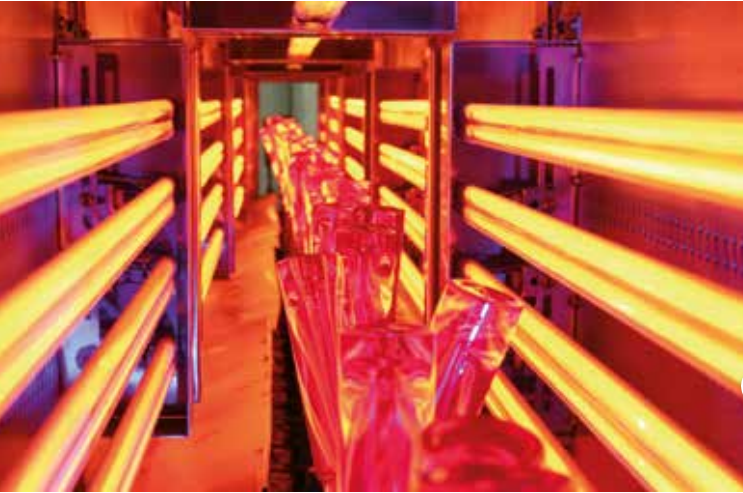
Think of this as more than just a fancy 3D drawing. It’s a model that actually understands physics. We plug in the wattage of your elements and the specific heat of your parts, and the simulation shows exactly how the heat travels through the tunnel. You can spot the dead zones where air just sits still, or the areas where parts aren’t curing properly. This is how we nail the spacing. If you jam the heaters too close together, you’ll scorch the powder. Too far apart? You get uneven curing. The simulation tells us the exact distance needed to keep that temperature gradient steady. No guessing.
Cutting Out the Waste
Physical prototyping is a money pit. Every time you shift a heating bank on a live line, you’re burning energy and tossing scrapped parts into the bin. With a digital twin, we “pre-produce” the run. We can tweak the conveyor speed and see exactly how it changes the soak time without wasting a single piece of metal. Plus, you get a clear map of the heat distribution. It tells you right away if your power supply can actually handle the load, or if you’re just waiting to blow a breaker the moment every zone hits peak temp.
The Reality Check
Now, this isn’t magic. The model is only as good as the info we put into it. For example, if your shop floor is 10 degrees colder than what we plugged into the simulation, your real-world ramp-up time is going to shift. That’s why we still do a bit of old-school calibration. Once the line is actually live, we check a few physical sensor readings to make sure the digital world matches the real one.