Why Your Thick Fabrics Aren’t Drying (And How to Actually Fix It)
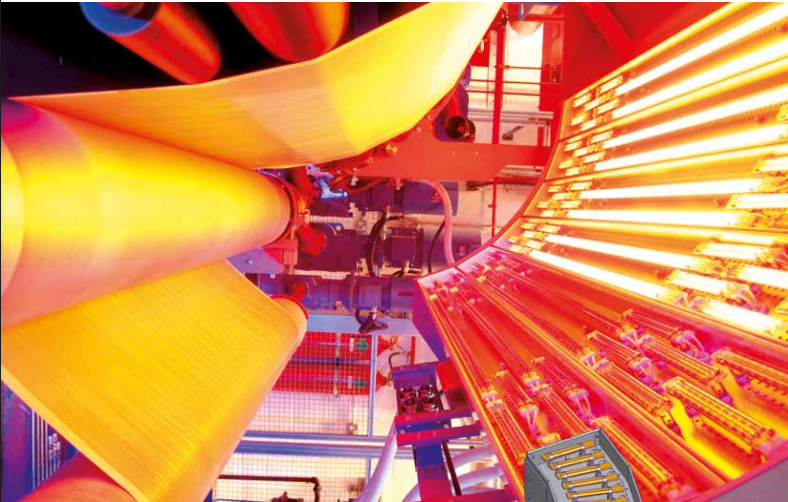
If you’ve ever tried to cure or dry a thick composite fabric using hot air, you know the frustration. You spend all this time waiting, only to pull the material out and realize the outside is scorched, but the core is still ice cold. It’s a nightmare on the shop floor. The problem is that air is just a terrible conductor. It hits a “wall” at the surface of the fabric and struggles to push through those dense fibers. It’s like trying to warm up a frozen steak by blowing a hair dryer on it—you’ll burn the outside long before the middle even thinks about thawing. A different way to think about heat This is where IR lamps come in. Instead of trying to heat the air around the fabric, IR sends waves straight into the material. Imagine these waves acting like little triggers that make the molecules inside the textile vibrate. That vibration creates heat from the inside out. For the heavy-duty stuff, we stick with medium-to-long wave IR. Those specific wavelengths just “fit” better with organic fibers and polymers. Instead of the heat sitting on the surface, it sinks deep into the structure. You get what we call volumetric heating. Basically, the center of your fabric warms up at pretty much the same speed as the edges. No more guesswork. The struggle with “the soak” Hot air relies on a “soak” method. It needs gaps in the weave to move through. But with high-density composites? Those gaps aren’t there. The air just bounces off. Naturally, the temptation is to just crank up the oven temperature. Don’t do that. You’ll just fry the surface fibers while the core stays cold. It’s a losing battle. Keeping it real: The trade-offs Now, IR is faster and way more precise, but it isn’t magic. Because IR travels in a straight line, if there are gaps in your lamp setup, you’re going to get cold spots. You have to be smart about how your lamps overlap to make sure every inch of the fabric is covered. And one last thing: watch out for reflective coatings. Some technical textiles act like mirrors and bounce that IR energy right back at the lamp. If you see that happening, just adjust your focal distance so you don’t overheat the lamp face.